
Climate and sustainable development financing, multilateral institution reforms, regulation of digital assets, the spillover effect on developing economies from actions of western central banks, energy and food security in the backdrop of war in Europe, and sanctions on Russia and their impact on the global economy are some of the agenda items that India will take up as President of G-20, Finance Minister Nirmala Sitharaman said on Tuesday. India will take over as President of the powerful international grouping on December 1 for a year. There will be around 200 meetings throughout the country, with the summit Heads of State meeting expected to be held in New Delhi next September.
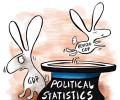
The Economic Survey 2022-23 (FY23), to be presented a day before Union Budget 2023-24 (FY24), is likely to project India's real gross domestic product (GDP) growth between 6 per cent and 7 per cent for FY24, Business Standard has learnt. The broader theme of the Survey could be on how India has dealt with two years of a global pandemic and the ongoing geopolitical disturbance, the strengths and weaknesses that emerged, and what lessons may be learnt. The much-awaited Survey will be the first one by Chief Economic Advisor V Anantha Nageswaran and his team in the finance ministry's economic division.

The credit guarantee cover under the scheme would be both transaction-based (for single eligible borrowers) and umbrella-based (for a group of eligible borrowers).

About 56 million Indians may have plunged into extreme poverty in 2020 as a result of the pandemic, increasing the global tally by 71 million and making it the worst year for poverty reduction since World War II, according to fresh estimates by the World Bank. "The global goal of ending extreme poverty by 2030 is likely to be missed: By then, about 600 million people will remain in abject poverty. A major course correction is needed," Indermit Gill, chief economist at the World Bank, tweeted. The World Bank in its latest "Poverty and Shared Prosperity" made fresh estimates of poverty using a new extreme poverty line based on the purchasing power parity (PPP) of $2.15, the earlier one being at $1.9.

'If you look at the order books of capital equipment companies or money deployed on the ground, there is forward movement in terms of actual investment by the private sector.'

The Centre is in "mission mode" to fill vacancies in government departments and ministries. The Department of Expenditure is currently following up with other wings of the government to expedite pending appointments. Regular follow-ups are being made to fill the vacant positions, so that the stated target of eliminating 1 million vacancies is met by December 2023, ahead of the next Lok Sabha elections. Even as the nodal ministry for filling vacant positions in the government is the Department of Personnel and Training (DoPT), the Department of Expenditure's Establishment Coordination (Personnel) division is providing support for the recruitment drive.

The Serious Fraud Investigation Office (SFIO) has arrested a person who the Ministry of Corporate Affairs (MCA) said has emerged as the mastermind of the racket of incorporating a large number of shell companies with Chinese links in India.

Days after Moody's cut its gross domestic product (GDP) forecast for financial year 2022-23 (FY23) after the official GDP print for the June quarter came in lower than expectations, the global ratings agency said it would maintain its long-term sovereign debt credit rating and outlook on Asia's third-largest economy. "The credit profile of India reflects key strengths, including its large and diversified economy with high growth potential, a relatively strong external position, and a stable domestic financing base for government debt," Moody's said on Tuesday. "We do not expect rising challenges to the global economy, including the impact of the Russia-Ukraine military conflict, higher inflation, and the tightening financial conditions on the back of policy tightening, to derail India's ongoing recovery from the pandemic in 2022 and 2023," it said.

To set up a future-ready administration geared towards the target of $2 trillion exports by 2030, the Department of Commerce has decided to set up a dedicated trade promotion body to drive overall promotion strategy, export targets, and execution as part of a restructuring exercise. The trade promotion body will formulate and drive overall trade promotion strategy; create and drive India's branding across focus markets and sectors; drive coordinated action across missions, states and export promotion councils; strategic initiatives, including advisory and buyer-seller meet; and develop digital platforms for exporters and buyers. Based on a 14-volume 'restructuring dossier' by the Boston Consulting Group, the commerce department has already implemented some of the recommendations.

Once the iconic red-brick building of British India Corporation (BICL), which manufactured the popular "Lal-Imli" brand of woollen products, made Cawnpore (now Kanpur) the Manchester of the East. In the 75th year of independence, the government may finally pull the curtains on the century-old, now defunct public sector enterprise. "The Department of Public Enterprises (DPE) has floated a draft cabinet note for closure of British India Corporation (BICL) along with National Textiles Corporation (NTC). "The Cabinet may soon tak

Even as the bilateral relationship between the two neighbouring countries remains hostile, there is growing coordination between India and Pakistan on one multilateral forum - the World Trade Organization (WTO). Both countries have made two joint submissions at the WTO as co-sponsors in the past two months. In June, Pakistan joined India, Cuba, and 44 African countries, seeking sufficient flexibility in intellectual property rights for developing countries to fight the Covid-19 pandemic.

The Centre has garnered around Rs 2,500-3,000 crore in the first five weeks after it imposed a windfall tax on oil and gas companies for the export of fuel, Business Standard has learnt. It is likely that the government will continue with the one-time tax till the Indian crude basket is above $80 a barrel, sources said. The next review of the windfall tax on oil companies is early next week.

The Centre's capital expenditure (capex) outlay for the April-June quarter (first quarter, or Q1) of 2022-23 (FY23) could be close to Rs 1.5 trillion, Business Standard has learnt. As a percentage of full-year capex Budget Estimates (BE) of Rs 7.5 trillion, this could be at similar levels to the trends in the past few fiscal years. It is in the July-September quarter (Q2) of FY23 that capex is expected to pick up, when a bulk of the long-term capex loans to states are expected to be expended.
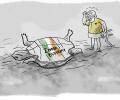
The International Monetary Fund (IMF) on Tuesday slashed India's growth forecast for 2022-23 (FY23) by 80 basis points to 7.4 per cent, citing less favourable external conditions and rapid policy tightening by the central bank. In its update to the April World Economic Outlook, the IMF said that though a global recession in 2022 was ruled out with a growth estimate of 3.2 per cent, the balance of risks was squarely to the downside, driven by a wide range of factors that could adversely affect the global economic performance. "The risk of recession is particularly prominent in 2023, when in several economies growth is expected to bottom out, household savings accumulated during the pandemic will have declined, and even small shocks could cause economies to stall.

'It is building the country's infrastructure, and delivering it very efficiently.'

A depreciating rupee, which briefly hit 80 to the dollar on Tuesday, may boost India's exports but price-inelastic imports of crude oil and gold would mean limited relief on the trade deficit, which clocked a record $26.2 billion in June. Due to global risk aversion on the back of geo-political tensions and aggressive policy tightening by the Fed, the dollar has appreciated against most currencies, including the rupee. And, with other currencies depreciating, India's comparative advantage in this respect may be limited.

'We actually have a problem because there may be too much activity in India.' 'Markets don't like too much concentration. But we are very happy with our collaborations in India.'

During his first Union Budget in July 2014, former finance minister Arun Jaitley announced the setting up of an institution called 3P India, with an allocation of Rs 500 crore. The intention was to mainstream public-private partnerships (PPPs) in India. The plan was to bring together the capacities of the government and private sector to push PPP projects.
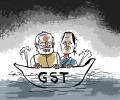
Agra has long been known for the Taj Mahal, but it is also a manufacturing hub filled with micro, small and medium enterprises (MSMEs) that make everything from electronic components to metal products, from paints and chemicals to footwear. And five years after the introduction of the Goods and Services Tax (GST), the MSMEs here complain that while the indirect tax regime has been transformative, cutting out the need to file multiple taxes, its biggest drawback has been the delay in credit refunds. Whoever you speak to - MSME owners, tax lawyers, or industry bodies like the National Chambers of Industries and Commerce (NCIC), Agra Footwear Manufacturers and Exporters Chamber (AFMEC) and Agra Shoe Manufacturers Association (ASMA) - they all emphasise that the GST continues to face some key challenges.

Union finance secretary T V Somanathan recently said the Centre had saved Rs 10,000 crore in FY22 on interest payments after adopting new accounting mechanisms for central government agencies and centrally sponsored schemes (CSS) for state governments. Speaking at an event, Somanathan said due to these, there was an unspent balance of Rs 1.2 trillion with state agencies from CSS as on March 31, 2022. This means this amount will be reduced from the Centre's borrowing for now and it can be considered a short-term saving for the exchequer.
